Filipinos start decorating for Christmas on September 1 — the first day of the "-Ber months" (September, October, November, December) — marking the unofficial start of the world's longest Christmas season, a 115-day stretch that includes an official 100-day countdown beginning September 16.
Most Filipino homes phase decorations in gradually rather than all at once: subtle changes in September (candles, seasonal wall styling, warm textiles), stronger accents in October (parols, wreaths, garlands), full Christmas installations by early to mid-November (tree, lights, tablescapes), and hosting-ready styling by mid-December (Noche Buena setup, Simbang Gabi accents). This guide walks through how modern Filipino homes phase in Christmas decor across all four -Ber months without overwhelming small spaces.
Why Filipinos start decorating in September
The tradition is rooted in the 100-day Christmas countdown, which officially begins on September 16 and runs through December 25. According to sociology lecturer Br. Clifford Sorita of the University of the City of Manila, this countdown is part of Filipinos' "psycho-social preparations" for the holidays — a way of mentally and emotionally gearing up for the season's family gatherings and hosting duties.
The Philippines holds the distinction of having the longest Christmas season in the world, stretching from September 1 through the Feast of the Three Kings in early January — roughly four full months. Culturally, this reflects the Filipino emphasis on family reunion, faith, and hospitality — Christmas is when overseas Filipino workers return home, extended families gather, and hosting responsibilities peak.
For homeowners, the extended timeline is practical rather than excessive: it lets households phase in decor gradually, spread out purchases across paycheck cycles (including the 13th-month pay released in November), and prep spaces for the multi-week hosting season.
The Four Phases of -Ber months Decorating
Most Filipino homes don't decorate all at once. The decor builds across four distinct phases:
September: Subtle Mood Shift
The first phase is about mood, not visual spectacle. Common September changes:
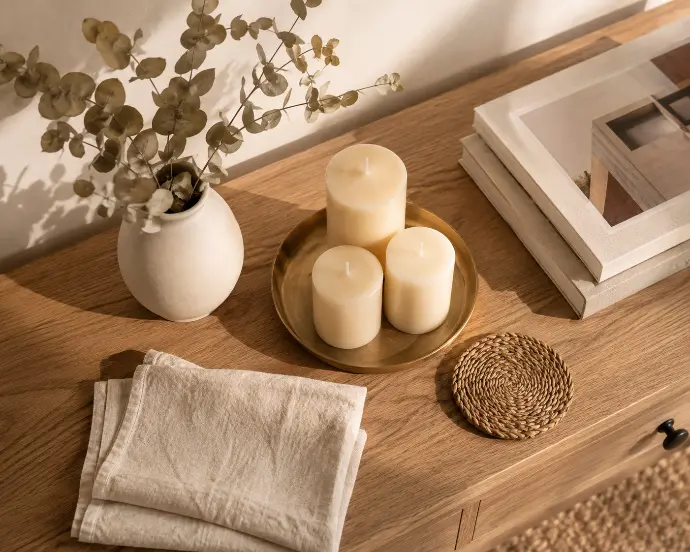
- Swapping cool-tone wall art or table decor for warmer palettes (deep greens, terracotta, burnished gold)
- Adding candles and warm-lit accents to consoles, dining tables and coffee tables
- Layering warm-toned textiles like throws and pillow covers
- Refreshing framed photos to include family portraits, travel memories or milestone shots
No tree, no parol, no full-scale installation. September is the preparation month – the visual equivalent of Jose Mari Chan sings starting to play softly on the radio.
October: Filipino Christmas Symbols Enter
By mid-October, most homes bring out distinctly Filipino Christmas elements:
- The parol – the star-shaped lantern symbolizing the Star of Bethlehem – appears in windows, doorways and entryways. Modern parols use capiz shell for a light-catching quality
- Small wreaths and garlands begin appearing on doors and staircases
- Advent candles are set up on dining tables or console tables
- Christmas-themed wall art or seasonal art rotations replace year-round pieces on feature walls
- Family photo wall get refreshed with holiday-themed frames or a curated selection of past Christmas photos.
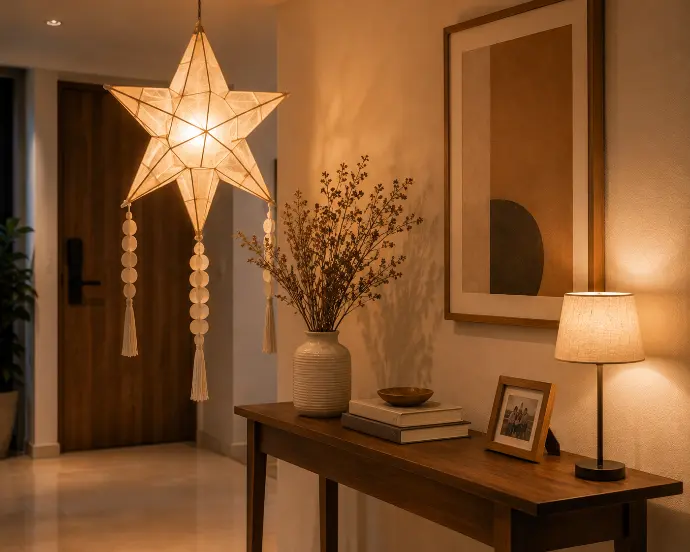
October is when Filipino cultural identity comes into the styling alongside year-round decor.
November: Full Christmas Installation
By mid to late November – often timed with the release of the 13th-month pay – most Filipino homes complete their Christmas setup:
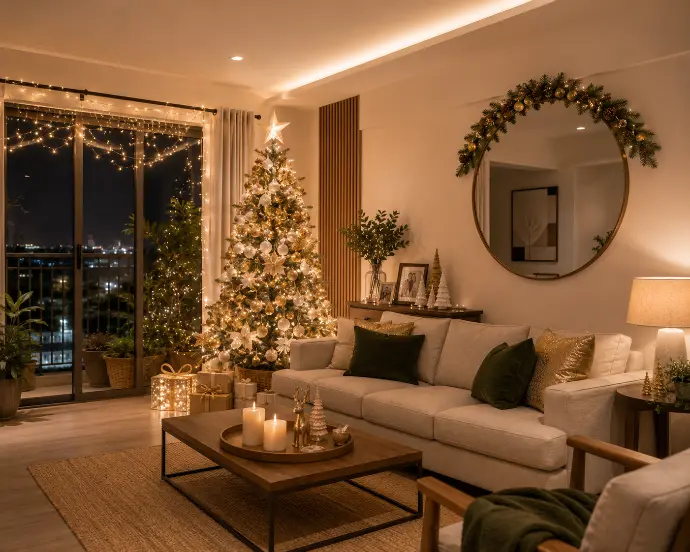
- The Christmas tree goes up
- Full lighting installations
- Complete tablescapes for the dining area
- Statement mirrors are styled with garlands or seasonal wreaths
- Console tables become styled vignettes with Christmas figurines, candles and heirloom pieces
By November 15, most Metro Manila condos and homes are visually "Christmas-ready" for early December hosting.
December: Hosting-ready refinement
The final phase is about hospitality:
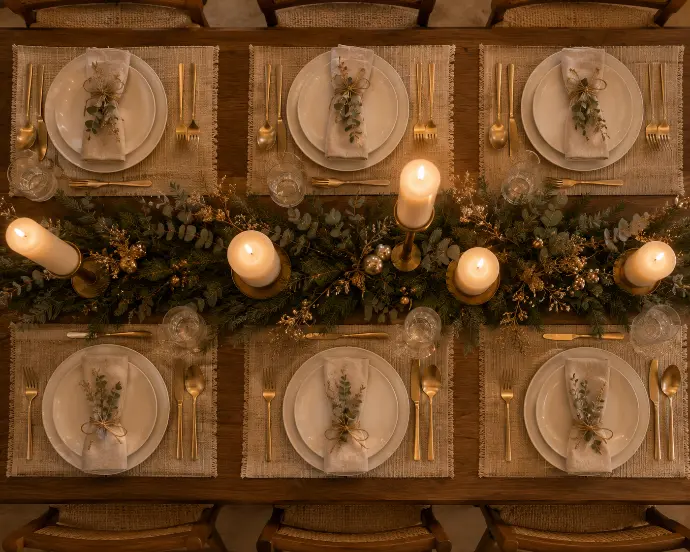
- Noche Buena (Christmas Eve) table styling – full tablescape with runners, candleholders, etc.
- Simbang Gabi accents – small nativity scenes, prayer corners, family photo walls of past Simbang Gabi gatherings
- Media Noche (New Year's Eve) transition planning – decor that carries from Christmas into New Year without needing a full reset.
What Filipinos Style First vs Last
A general order most Filipino homeowners follow:
First (September): Table decor and small styling objects such as candles, vases and small ceramics. Low commitment, easy to swap.
Second (early October): Wall styling – swapping wall art, adding seasonal frames and refreshing gallery walls with holiday photos
Third (mid-October): Filipino cultural pieces like parol, capiz, wreath, etc.
Fourth (November): Tree, lights and full installation
Fifth (December): Hosting-specific styling like tablescapes, enteryway decor, etc.
How Modern Filipino Homes Balance Tradition with Contemporary Styling
Modern Metro Manila condos and townhouses often struggle with balancing traditional Christmas symbols against contemporary interior aesthetics. The most effective balance strategies:
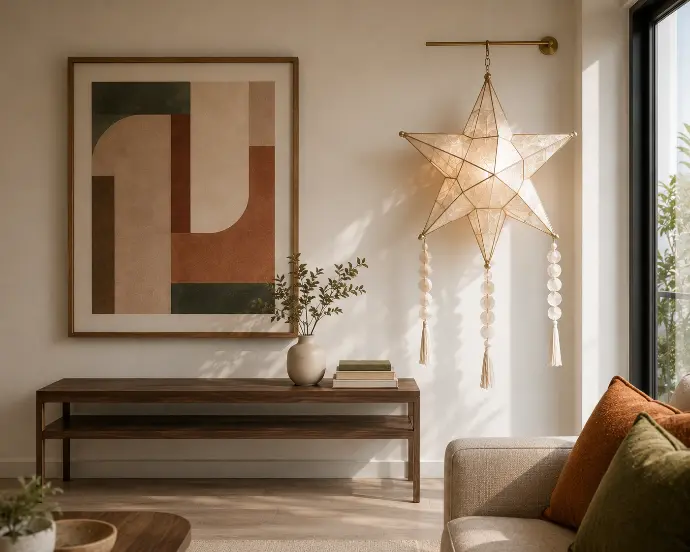
- Choose one traditional focal piece – usually the parol or a capiz installation and let the rest of the styling stay quiet.
- Keep year-round decor as the foundation. Wall art, mirrors, clocks and framed pieces stay in place; seasonal elements layer around them rather than replacing them.
- Match metals and tones. Warm gold and brass accents integrate with most contemporary interiors. Silver and icy blue lean more into modern minimalist Christmas aesthetics.
- Limit Christmas red. In small condos, too much red overwhelms. Use it as an accent rather than the dominant color.
According to Real Living Philippines and Spot.ph, the strongest 2026 Filipino Christmas styling trend is the "elevated hybrid" – traditional Filipino Christmas symbols paired with contemporary neutral interiors, rather than wither extreme.
How to Phase in Christmas Decor Without Overwhelming a Small Home
For Metro Manila condos and small townhouses, a few rules keep the styling manageable:
- One focal wall. Pick one wall to carry the main Christmas styling. Let the rest stay year-round.
- Vertical over horizontal. Small condos benefit from vertical Christmas elements that don't consume floor space.
- Style your mirror. A statement mirror styled with a small wreath or garland becomes a Christmas focal point without adding a full new decor category.
- Layer year-round decor with seasonal accents. Existing wall art with a small pinned Christmas ornament, a year-round clock surrounded by garland — the layering approach avoids full storage cycles for existing decor.
- Plan storage before you buy. For every Christmas piece you add, know where it will live in January. Condos with limited storage often regret impulse Christmas decor purchases by January 3.
People Also Ask
The extended Christmas season is rooted in the 100-day countdown to December 25 and reflects Filipino cultural values of family reunion, faith, and hospitality. It also gives households time to spread out purchases and prepare for the multi-week hosting season.
Most Filipino homes put up the Christmas tree in mid to late November, often timed with the release of 13th-month pay. Earlier setup (October) is also common; later setup (early December) is typical for households prioritizing minimal seasonal display.
Focus on one styled wall or feature area, use vertical elements to save floor space, style an existing mirror with a small wreath or garland, and layer seasonal accents onto year-round decor rather than replacing it entirely. Vertical parols and wall-mounted wreaths work particularly well in compact spaces.
The parol represents the Star of Bethlehem that guided the Three Kings to the manger. Capiz shell decorations reflect Filipino coastal heritage and craftsmanship. The belen (nativity scene) reflects the Catholic religious foundation of the holiday. Simbang Gabi (nine dawn masses) leading up to Noche Buena (Christmas Eve dinner) frame the religious observance of the season.